


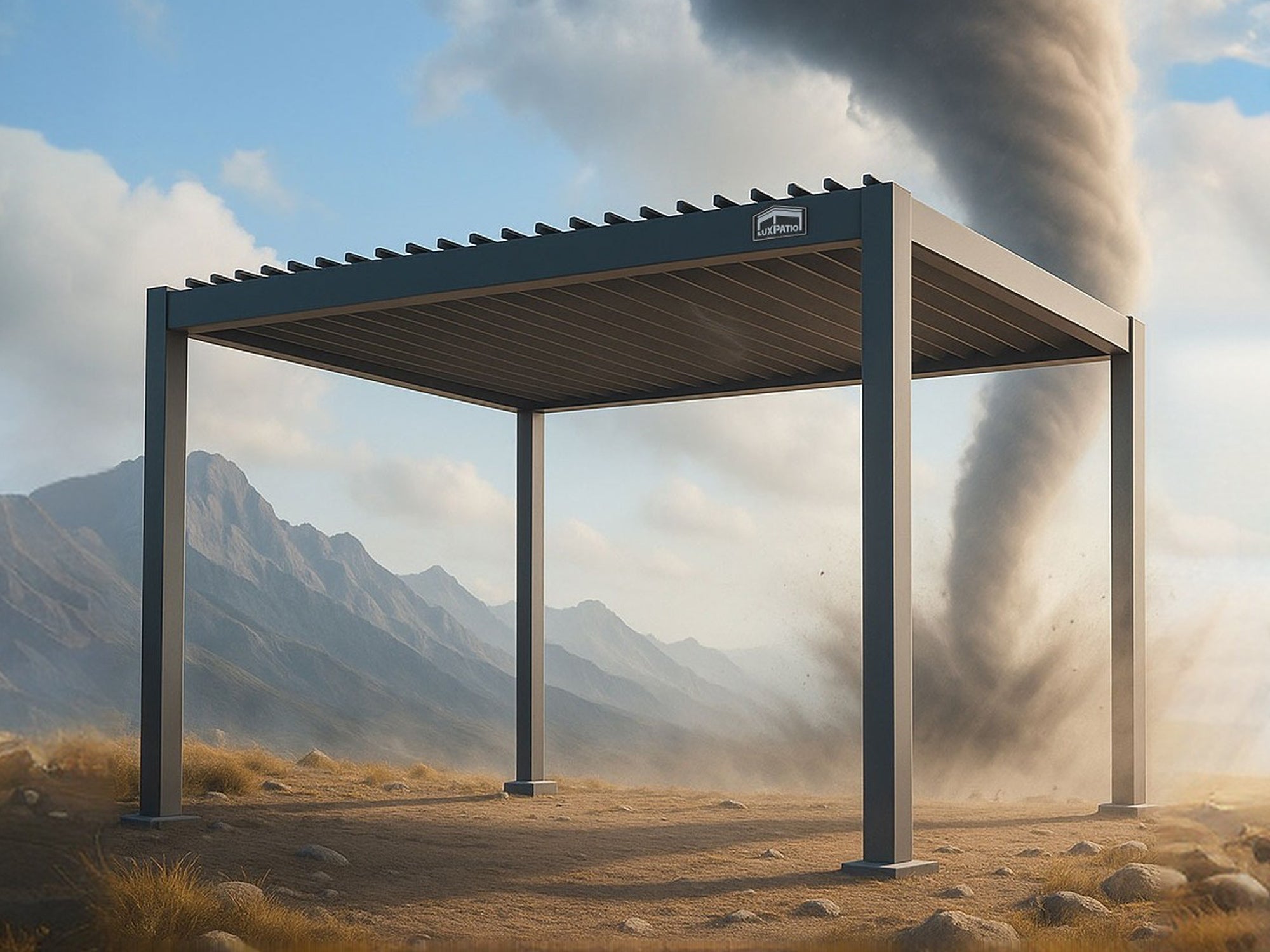
On a calm day, a pergola feels like a cozy outdoor room. On a windy night, it can suddenly feel like a test of your construction choices. The real question behind every design sketch is simple: will this pergola structure stay steady when the weather gets noisy? The answer depends on wind rating, pergola design, and the foundation under every post, all working together instead of on paper alone.
Pergola Wind Ratings Explained: How Much Wind Can a Pergola Really Withstand?
No Single Number
Homeowners often ask for a single wind speed as if every yard, house, and pergola were identical. Wind ratings never work that way. Any number you see assumes a specific size, layout, base, and exposure. A compact pergola between two walls sees very different forces than the same model sitting at the edge of an open field.
Reading Wind Data
When you check documentation, pay attention to the small print rather than the headline. Look for:
- Design wind speed in miles per hour
- Notes about exposure, such as open terrain or suburban surroundings
- Minimum requirements for slab thickness, footing size, and anchor spacing
If a brochure claims strong performance without tying it to a clear pergola structure and a specific base, treat that promise as incomplete. Wind rating only means something when it is tied directly to how the pergola is installed.
Match Rating to Yard
Once you know the design wind speed, compare it with local building information and what your yard really looks like. A sheltered urban courtyard has different needs from a hilltop lot facing the prevailing wind. The goal is not chasing the highest number you can find. The goal is choosing a pergola design whose rating, exposure, and installation method line up with your site so the structure behaves predictably in seasonal storms.

Pergola Material Wind Resistance: Wood vs Aluminum vs Steel
Wood in the Wind
Wood pergolas feel warm and traditional. With good joinery and enough cross-section in posts and beams, they can handle a fair amount of wind. Over time, though, the weather starts to corrode the frame. Boards shrink and swell, fasteners loosen, and small cracks form around key joints. If you love timber, plan on regular inspection, sealing, and occasional hardware upgrades so wind performance stays close to what it was on day one.
Aluminum in the Wind
An aluminum pergola trades rustic charm for predictability. The material does not rust, holds precise shapes, and pairs well with powder coatings for long-term outdoor use. That makes it a strong candidate in gusty climates. Stiff aluminum profiles, when combined with thoughtful pergola structure and bracing, can keep movement to a minimum. For many homeowners, this blend of light weight, durability, and low upkeep feels like the sweet spot between strength and everyday practicality.
Steel in the Wind
Steel has an obvious appeal. It is heavy, strong, and stiff. Those qualities help in wind, yet they also demand more from the foundation and hardware. Larger spans, heavier beams, and higher loads mean you need excellent corrosion protection and carefully planned footing work. An aluminum vs steel pergola comparison often ends with steel in custom or commercial projects and aluminum in most backyards, simply because aluminum is easier to live with while still offering solid wind performance.
Quick Material Check
| Material | Wind Behavior | Care Level | Typical Fit |
| Wood | Strong at first, can loosen as it weathers | High | Classic look in mild to moderate wind |
| Aluminum | Stable, predictable with good design | Low | Modern yards, varied climates |
| Steel | Very strong, very heavy | Medium–High | Exposed sites, custom projects |
How Pergola Design and Structure Affect Wind Load and Stability
Material is only half the story. The way a pergola design shapes the wind, and the way the pergola structure carries loads into the ground, can make the same material feel either rock solid or nervous when gusts arrive.
Open vs Enclosed Layout
An open frame lets air pass through and usually sees lower forces. As soon as you add curtains, privacy screens, or solid slats, the pressure climbs. Full-height walls on the windward side can trap air and build uplift under the roof. Before you add those elements, step back and ask whether the posts, anchors, and foundations were sized with that extra surface area in mind.
Roof Shape and Louvers
A pergola with roof panels or adjustable louvers behaves differently from one with only rafters. Large, flat surfaces invite sideways gusts and uplift. Deep overhangs apply leverage to corner posts. With a pergola with roof louvers, it often helps to set the blades slightly open before a gale so wind can bleed through instead of slamming into a sealed surface. Treat those louver controls as part of your storm preparation, right alongside closing windows and bringing in cushions.
Clean Load Paths
Strong pergola structures share a simple trait. You can trace a clear path from the roof, through beams and posts, into anchors and foundations. Posts line up with footings. Beams land cleanly on posts rather than hanging in space. Bracing or hidden stiffeners lock corners together. When that path exists, wind loads travel down into the ground instead of twisting the frame, squeaking fasteners, or cracking concrete over time.

The Foundation: The Most Critical and Overlooked Part of Pergola Wind Performance
People love talking about louvers, lights, and color. Wind cares about concrete, soil, and hardware. The base decides how your pergola behaves on the worst nights of the year.
Why Bases Matter
Wind tries the same two tricks every time. It pushes sideways, and it tries to peel the structure away from the ground. A good foundation answers both. Solid concrete resists uplift. Footings or slabs spread loads into the soil. Anchors tie posts down so the pergola does not creep across the patio or rack out of square. A weak base turns even a well-engineered frame into a wobbly sail.
Slab vs Footings
On a patio, a reinforced concrete slab can be a great starting point. The key lies in thickness, reinforcement, and keeping anchors away from edges and cracks. In a yard without a slab, individual footings or piers sized to local frost depth and loads give each post a firm seat. Metal post bases or brackets then connect the pergola installation to that concrete, so wind loads go where they belong.
Deck Installations
A pergola on decks needs extra thought. Posts should tie into beams or doubled joists, not just sit on decking boards. Blocking around each post and hardware rated for uplift helps the deck and pergola behave as one unit. In high wind zones, it often makes sense to have a pro review the deck framing before adding weight and sail area to the structure.
Code and Hardware
Local building offices usually publish design wind speeds and may require permits for certain sizes or heights. It is tempting to skip that step, yet those values give you a clear target. Combine them with structural screws, bolts, and corrosion-resistant anchors sized for real pull-out loads, and you end up with a foundation that quietly supports the pergola season after season.
How to Strengthen Your Pergola Against High Winds
Maybe your pergola is already in place. Maybe you are still sketching ideas. In both cases, a few practical choices can noticeably improve wind performance.
Upgrade Existing Frames
Walk around your pergola twice a year with a critical eye. Look for rust on hardware, hairline cracks in concrete, and any movement where posts meet the base. Tighten loose bolts. Replace weak screws with structural fasteners where you can. If the frame shudders in gusts, consider adding discreet corner braces or internal stiffeners. Small upgrades like these often remove the creaks and rattles that keep you watching the weather app.
Plan Wind-Smart Layouts
For new projects, design with wind in mind from the first sketch:
- Keep height in reasonable proportion to footprint
- Avoid extremely long, unsupported spans when possible
- Use adjustable elements such as louvers or screens that can be opened before a storm
- Choose an aluminum pergola in regions where corrosion and wind both matter
A wind-smart pergola design still looks beautiful. It simply leans on balanced proportions, clear load paths, and enough stiffness to stay composed when gusts cross the property.
When to Hire Pros
There is pride in a successful DIY pergola installation. There is also wisdom in knowing when help makes sense. If your structure ties into a house wall, sits on a complex deck, or must satisfy local code checks, experienced installers earn their keep. They have already seen which small mistakes cause trouble in the first serious storm and know how to avoid them.
Build a Pergola That Stays Beautiful and Stable in the Wind
A calm, steady pergola during a noisy storm is one of those quiet satisfactions in home ownership. Reaching that point comes from a handful of clear decisions: a realistic wind rating, a sensible pergola structure and layout, and a foundation that truly anchors the frame. When those pieces line up, durable pergolas stop feeling like a risk and start feeling like the outdoor rooms they were meant to be.
FAQs About Pergola Wind Resistance and Safe Installation
Q1: Can pergolas handle storms?
A well-engineered pergola with the right base can handle the kind of storm gusts many neighborhoods see each year. The key lies in matching design wind speed, exposure, and construction quality. Choose a system with clear wind information, then make sure the base and anchors in your yard follow those requirements. Regular checks for loose hardware, movement at post bases, or small cracks in concrete help keep the structure ready for the next rough night.
Q2: Are roofed pergolas safe?
A pergola with roof panels or louvers can be safe in windy areas when it is designed and installed for that reality. Roof elements should have a recommended storm position so wind can travel through instead of pushing on a sealed surface. Posts, beams, and foundations need to match the extra loads that a covered structure brings. If you are unsure, ask your installer to explain how the pergola with a roof is anchored and how you should set it before a serious storm.
Q3: Are pergolas on decks safe?
Pergolas on decks can work well, yet they expose weaknesses quickly if the deck frame is light. Thin decking boards alone are not enough. Posts should bolt into beams or reinforced joists, with blocking and uplift-rated hardware taking wind loads down into the support structure. In higher wind zones, a quick review by a contractor or structural professional before you build is a smart investment.
Q4: How to maintain pergolas?
Wind resistance is not fixed forever on the day of installation. A short maintenance routine keeps performance high. Walk the perimeter at least once a year and after major storms. Look for wobbly posts, noisy joints, rust on fasteners, and clogged drainage channels. Clear debris that traps moisture around anchors. When small issues appear, address them early. That habit protects your pergola design choices and keeps the structure feeling trustworthy when the weather acts up.


